









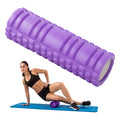




Whether in the gym, at a yoga class, or at home on your mat: the foam roller—also called a massage roller—has become an essential part of modern daily life. But what is behind the hype? Is it really worth buying a foam roller? And which fitness roller is the right one for your back, your legs, or your yoga practice? In this article, we answer all these questions—factually, clearly, and with concrete recommendations.
What is a foam roller and how does it work?
Fascia is a fine, net-like connective tissue that runs throughout the entire body, wrapping every muscle in a sheath of collagen and elastin fibers. If they are poorly maintained due to a lack of movement, poor posture, or stress, tension and discomfort can arise.
When rolling over a foam roller, mechanical pressure is applied to the muscles and the surrounding tissue. This pressure stimulates blood circulation and metabolic activity in the tissue. Scientists now assume that the effect is less about directly "releasing adhesions" and primarily about neurological mechanisms: pressure receptors are stimulated, muscles relax, and pain perception is reduced. At the same time, tissue temperature may increase slightly, which improves elasticity.
In short: A foam roller is no miracle cure—but it is an effective tool for self-massage, muscle relaxation, and preparation for movement that is safe and easy for most people to use.
The most important benefits of a massage roller at a glance
- Relieving tension: Regular rolling helps to noticeably reduce muscle tension—especially in the back, thighs, and calves.
- Increasing mobility: Studies show that foam rolling can measurably improve range of motion in the short term—without reducing muscle strength, as can be the case with some stretching methods.
- Promoting recovery: After intense training sessions, the roller supports muscle recovery and can help alleviate sore muscles by increasing blood flow to the affected area.
- Warming up before training: Used before a workout, the massage roller activates the muscles and specifically prepares the tissue for exertion.
- Improving posture: By loosening overactive muscles and fascia, regular rolling can contribute to a more upright, relaxed posture.
- Mental relaxation: Those who treat themselves to a regular rolling session also create a moment of calm—which is good not only for the body but also for the mind.
Foam roller for the back: How to use it
The roller for the back is one of the most common applications—and one of the most effective. The upper back in particular, including the trapezius and lateral back muscles, benefits from targeted self-massage, as these areas are heavily strained in many people due to sitting for long periods.
Step-by-step: Rolling out the upper back
- Lie on your back and place the foam roller crosswise under your upper back (at the level of your shoulder blades).
- Clasp your hands behind your head and place your feet flat on the floor.
- Lift your buttocks slightly off the ground and slide yourself slowly back and forth so that the roller glides over the thoracic spine.
- Pause briefly at particularly tense spots—take deep breaths in and out as you do so.
- Never roll directly over the spine, but rather to the sides over the back muscles.
Recommendation: For the back, the Massage and Physiotherapy Roller 30 cm EPP Foam Roller for the Back is particularly well-suited—the 30 cm width and high-quality EPP material ensure even pressure across large muscle surfaces. For those who want to remain flexible while traveling or with light luggage, the Extendable Back Massage Roller 14–36 cm is a practical solution: the length can be adjusted steplessly—ideal for the back, neck, and more.
Important safety instructions for back rolling
- Never roll directly over the spine or over bones and joints.
- Avoid excessive pain—a light, pressure-like pulling sensation is normal; severe pain is a warning signal.
- Roll slowly and in a controlled manner: about one hand's width per second, pausing briefly at sensitive areas.
- Treat each muscle group for about 1–2 minutes.
Yoga roller, fitness roller, duoball – which roller suits you?
When looking to buy a massage roller affordably, you are faced with a colorful selection. We show you which versions are suitable for which use:
Classic Foam Rollers (EPP/EVA)
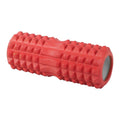
The standard among foam rollers. Soft EVA rollers are ideal for beginners and sensitive areas, while harder EPP rollers offer a more intensive deep-tissue massage. The Foam Roller 30 cm – Fitness EVA Massage Roller is a versatile all-rounder for home and the gym—robust, hygienic, and suitable for many body areas.
Yoga Roller and Multifunctional Roller
A yoga roller can be used not only for fascia training but also as a support for yoga and Pilates exercises. The Yoga Massage Roller Black – Functional and Versatile combines both: it serves as a classic massage roller and as a versatile exercise tool for yoga or fitness.
Sets with ball and duoball
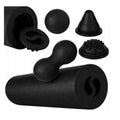
For an even more targeted massage—for example, on the shoulders, neck, or gluteal muscles—combination sets with a massage ball and duoball are recommended. The duoball (also known as a "peanut ball") is particularly well-suited for working on both sides of the spine simultaneously without putting pressure on the spinous processes. In the shop, you will find two high-quality options:
- 5-in-1 EPP Foam Roller Set with Ball & Duoball – Massage Roller Set: Perfect for those who want a complete set right from the start—roller, duoball, and massage ball in one package.
- 5-in-1 Foam Roller Set – Foam Roller, Duoball & Massage Ball for Back, Neck & Muscle Massage: Ideal for targeted treatment of the back, neck, and individual trigger points—a true all-around package for beginners and advanced users.
How often and when should you use a foam roller?
For noticeable and lasting effects, experts recommend regular use. As a guideline:
- Beginners: 2–3 times per week, start with gentle exercises.
- Advanced: Daily use is possible—but don't overdo it.
- Before training: Activates blood circulation and prepares the muscles for strain.
- After training: Promotes recovery and can alleviate sore muscles.
- On rest days: Loosens muscles and provides relaxation without the additional strain of training.
1–2 minutes of rolling time per muscle group is sufficient. Roll slowly, in a controlled manner, and with even breathing—this is more effective than fast back-and-forth rolling.
Frequently Asked Questions
Who is a foam roller suitable for?
A foam roller is generally suitable for most people—whether you are a fitness novice, a gym enthusiast, or an office worker with back problems. Anyone suffering from acute injuries, inflammation, or chronic conditions should consult a doctor or physical therapist beforehand.
What is the difference between EPP and EVA foam rollers?
EPP (expanded polypropylene) is harder and more dimensionally stable—ideal for intensive deep-tissue massage. EVA (ethylene-vinyl acetate) is softer and more comfortable, especially for beginners or sensitive body areas. Both materials are durable and easy to clean.
Can I use the foam roller daily?
Yes, daily rolling is generally safe—as long as you listen to your body and do not apply excessive pressure to one area. Be careful never to roll directly on bones, joints, or the bare spine.
Does a foam roller really help with back pain?
Regular self-massage with a foam roller can noticeably reduce muscle tension in the back and contribute to relaxation. However, it does not replace medical or physical therapy treatment for serious back problems.
Which foam roller is best for beginners?
For beginners, we recommend a softer EVA roller or a complete set that offers different levels of firmness and shapes. The 5-in-1 EPP Foam Roller Set with Ball & Duoball is an ideal choice, as it directly provides the most important tools for different areas of the body.
Conclusion: Is it worth buying a foam roller?
Yes—if you use it regularly and correctly. A foam roller is an affordable, versatile, and practical aid for daily life that releases tension, promotes mobility, and supports muscle recovery. Whether you choose a classic fitness roller, a multifunctional yoga roller, or a practical massage roller set with a ball and duoball—at Da Meso, you will find the right solution for every need and budget. Simply browse our range and start your fascia training today.